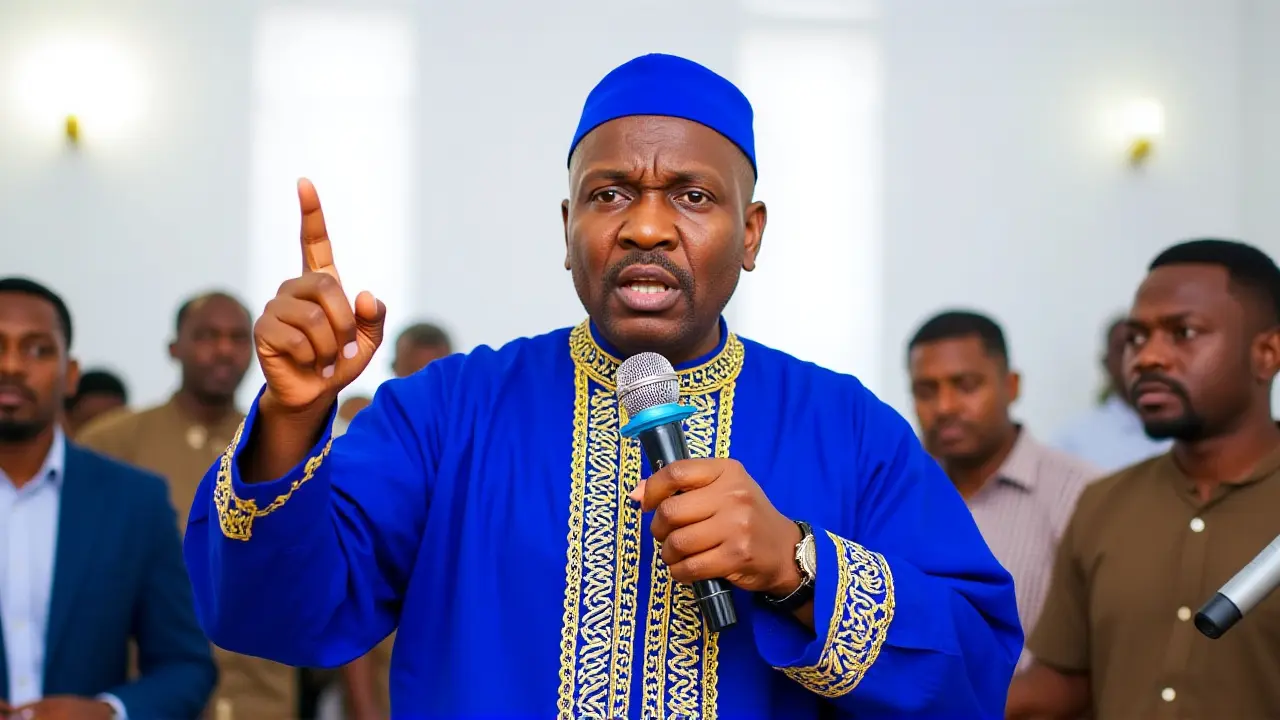
When tensions flare between the pulpit and the parliament, everyone watches closely in Nigeria. Recently, Primate Babatunde Elijah Ayodele, founder and spiritual head of INRI Evangelical Spiritual Church, found himself at the center of a storm involving the federal government. He has firmly denied allegations that he attempted to extort Bayo Adelabu, Minister of Power, to the tune of N150 million. The accusation was serious: claiming Ayodele demanded payment for "spiritual intercession" to help Adelabu secure the governorship of Oyo State.
The drama unfolded publicly after Adelabu filed a petition with the Department of State Services. According to reports, the incident occurred amidst a backdrop of intense political maneuvering leading up to the 2027 general elections. But here’s the twist: Ayodele pushed back hard against the narrative. Through his media aide, Osho Oluwatosin, the cleric explained that he never asked for cash. Instead, he claimed the conversation revolved around purchasing trumpets for church use. “Adelabu desperately looked for me,” Ayodele stated, flipping the script on who initiated contact. It’s a classic case of conflicting accounts, the kind that leaves observers wondering which version holds water.
The Alarming Accusation and Rapid Denial
This isn’t just another tabloid scoop; it’s a matter that touches the core of public trust. The allegation suggested a quid pro quo arrangement where spiritual favors were monetized for political gain. In Nigeria, where faith-based organizations often hold significant sway, such accusations carry weight. The Ministry of Power isn’t small potatoes either. Adelabu was appointed to this role by President Bola Ahmed Tinubu in 2023, putting him right in the thick of executive power.
Surprisingly, the denial came swiftly. Ayodele didn’t wait for weeks to issue a response. He leveraged a press event scheduled for the release of his annual prophecies to address the elephant in the room. It was a strategic move, ensuring maximum visibility. By framing the interaction as a misunderstanding about equipment rather than cash, he attempted to dismantle the extortion narrative before it could solidify in the public eye. Yet, filing a report with the DSS suggests Adelabu feels strongly that he was targeted.
A Closer Look at the Prophecy Compendium
Timing is everything in politics, and Ayodele knows how to work the calendar. The controversy erupted during the unveiling of a comprehensive 146-page compilation of prophecies. On Saturday, December 20, 2025, a crowd gathered at the church headquarters in Oke Afa, Lagos State. While the extortion claim grabbed headlines, the actual content of the prophecies offered a darker glimpse into the future.
the Prophecy Release ConferenceLagos State saw Ayodele make several bold predictions for the year ahead. One standout prediction suggests that northern leaders will mobilize strongly against Tinubu ahead of the 2027 presidential election. He even went so far as to predict division within the North due to Tinubu’s leadership style. Additionally, he prophesied that Atiku Abubakar would face blackmail attempts. There’s also a warning that the Economic and Financial Crimes Commission (EFCC) under Chairman Ola Olukoyede will expose many politicians, prompting those politicians to gang up against the chairman.
These aren’t idle musings for Ayodele’s team. They maintain a record of 15,000 fulfilled prophecies over 31 years. Some cited examples include warnings against VAT increases and predictions regarding former CBN Governor Godwin Emefiele. Of the 2025 prophecies, they claim roughly 200 have already come to pass. Whether you believe in their accuracy or not, the influence these predictions wield in political circles is undeniable. When a popular cleric starts talking about elections, governors pay attention.
Political Deadlines and Gubernatorial Ambitions
The Adelabu-Ayodele spat doesn’t exist in a vacuum. It’s happening while the clock ticks down on a major federal directive. Earlier in March 2026, President Tinubu issued a clear order. All political appointees under his administration must resign if they wish to contest elective positions in the 2027 polls. The cutoff is set for March 31, 2026. This creates immediate pressure on figures like Adelabu who are eyeing the Oyo governorship throne.
It’s a crowded field. Adelabu isn’t the only one from Oyo State expected to step down. Barrister Adebayo Shittu and Engineer Rauf Olaniyan are also lining up their ambitions under the All Progressives Congress platform. Shittu currently serves as Pro-Chancellor of a federal university in Ebonyi State, while Olaniyan chairs a college council in Oyo. Interestingly, none have resigned yet as of the latest reports. They are likely waiting to see how the primary process unfolds before making the formal move.
For Adelabu, hailing from Ibadan, the stakes are personal and political. If he pursues the ticket, he cannot remain Minister of Power. This directive from the Office of the Secretary to the Government of the Federation ensures that no one can straddle both worlds indefinitely. The controversy with Ayodele might look like a distraction tactic or perhaps genuine conflict, but the underlying reality remains: the race for Oyo is heating up, and every voice counts.
What Lies Ahead for the Contenders?
As we move closer to the resignation deadline, expect more noise. Ayodele has positioned himself as an observer with insight, but his denial of financial dealings keeps him out of direct legal trouble for now. For Adelabu, clearing his name is priority number one before he can focus on campaign trail logistics. The intersection of religious prophecy and secular ambition will continue to generate headlines. In a country where faith often shapes voting patterns, understanding these dynamics is key to predicting election outcomes.
The situation highlights the unique challenges of modern Nigerian governance. It’s a blend of tradition, ambition, and regulation. Whether the EFCC actually exposes politicians as predicted, or if northern leaders fracture as foreseen, the coming year promises volatility. For now, the question remains: will the minister quit his post to chase the governorship, and will the cleric’s trumpets sound louder than the ministers’ briefcases?
Frequently Asked Questions
Why did Primate Ayodele deny the extortion claim?
Primate Ayodele denied the claim because he stated he never asked for money. He clarified that the interaction was misunderstood as a request for him to purchase church trumpets, not a demand for N150 million in exchange for political favor.
What is the deadline for political appointees to resign?
According to directives from President Tinubu, all political appointees wishing to run for office in 2027 must resign from their current positions by March 31, 2026. This rule applies to officials like Minister Adelabu seeking the Oyo governorship.
Did Ayodele release new prophecies recently?
Yes, a 146-page compilation was released on December 20, 2025. It included predictions about the 2027 election, potential fractures among northern leaders, and challenges facing the EFCC and various Nigerian politicians.
Who else is running for Oyo Governor besides Adelabu?
Other likely contenders include Barrister Adebayo Shittu and Engineer Rauf Olaniyan. Both are currently serving in federal appointments and are expected to resign from those roles before the March 2026 deadline to pursue the APC nomination.
Where was the prophecy press conference held?
The event took place at the headquarters of the INRI Evangelical Spiritual Church located in Oke Afa, Lagos State. Media representatives and church dignitaries attended the launch of the prophecy compendium.
ryan pereyra
March 27, 2026 AT 18:35This situation epitomizes the sociopolitical dissonance plaguing contemporary Nigerian governance structures.
We observe a conflation of theological authority and bureaucratic ambition that fundamentally undermines institutional integrity.
The claim regarding spiritual intercession for electoral success is particularly disturbing.
It suggests a monetization of faith that corrodes the social fabric.
Ayodele's denial seems procedural, yet the context implies deeper entanglement.
The involvement of the DSS indicates this transcends mere tabloid sensationalism.
One must consider how such alliances influence policy decisions in the Ministry of Power.
The timing aligns suspiciously with impending gubernatorial aspirations.
Adelabu faces a complex dilemma between retention and resignation requirements.
Furthermore, the prophecy release serves as both political strategy and theological assertion.
Predicting fractures in the North demonstrates significant internal knowledge or mere speculation.
Regardless of veracity, these narratives shape voter sentiment significantly.
The EFCC warnings against corruption highlight systemic vulnerabilities in oversight mechanisms.
Ultimately, the intersection of church and state requires rigorous scrutiny before general elections.
Failure to address this dynamic risks further destabilization of the democratic process.
Jane Roams Free
March 29, 2026 AT 12:04It is really important that we support transparency in these kinds of high-stakes political situations.
Everyone deserves clarity when it comes to ministerial appointments and religious influence.
I hope that all parties involved can find a peaceful resolution soon.
Let us hope that the investigation clears up the confusion efficiently.
Bryan Kam
March 30, 2026 AT 05:05This whole spectacle proves nothing but wasted bandwidth.
Anthony Watkins
March 30, 2026 AT 11:06These politicians never stop lying to us idiots :(
Church money goes to pockets and not God :)
Trust no leader in Oyo ever again
Just wait until Tinubu fires them all
Cheri Gray
March 30, 2026 AT 16:33I think the guvnment needs to listen more
Becouse prophecies are taking ovver now
Its crazy how much religion affects poitics here
Hope we get answers sooner than later thow
Andrea Hierman
April 1, 2026 AT 14:41One cannot help but feel a certain amount of cynicism regarding these developments.
The dichotomy between spiritual counsel and financial transactions remains deeply problematic.
It would be advantageous for the authorities to issue definitive statements.
Patience is required while we await the full judicial outcome.
Danny Johnson
April 1, 2026 AT 17:17I understand why people are confused by all of this news cycle.
It can be hard to know who to believe sometimes.
Maybe the truth will come out in the open soon.
Let's hope for the best for everyone involved in this mess.
Christine Dick
April 3, 2026 AT 06:57How dare anyone claim innocence without proof!!!!!
Morality must not be compromised for gain!!!
Every lie must be exposed eventually!!
Justice demands absolute accountability!!
Sarah Day
April 5, 2026 AT 05:14Yeah this is pretty wild honestly.
Not surprised tbh given how things go here.
Hope its resolved soon tho.
Politics and church always mix oddly.
Kumar Deepak
April 6, 2026 AT 12:00Your jargon is impressive but misses the human cost.
The poor voters suffer most from these scandals.
Spiritual blackmail is a serious cultural breach.
Ganesh Dhenu
April 7, 2026 AT 00:12We should maintain our focus on the facts presented.
Observation is safer than judgment at this stage.
Yogananda C G
April 8, 2026 AT 22:19The unfolding drama presents a fascinating opportunity to observe leadership dynamics.
We see elements of tradition clashing with modern political imperatives.
Every word spoken by Ayodele carries weight beyond simple ecclesiastical commentary.
It reflects a broader tension in developing democracies regarding moral oversight.
Minister Adelabu finds himself in an unfortunate predicament regardless of the truth.
Public perception often dictates reality more than objective facts do today.
The requirement to resign by March creates urgency among aspirants.
Many officials hesitate due to uncertainty surrounding primary processes.
Shittu and Olaniyan represent viable alternatives within the current party framework.
Their hesitation reveals strategic calculation rather than lack of intent.
Prophetic claims often serve as soft power tools during election cycles.
The northern leaders prediction adds another layer of geopolitical complexity.
Such forecasts can mobilize opposition or unify factions depending on reception.
The EFCC exposure threat looms large over potential candidates.
Transparency remains essential for maintaining public trust in institutions.
We must remain hopeful that accountability prevails over personal ambition.
Divyanshu Kumar
April 10, 2026 AT 20:02Your assessment is quite comprehensive regarding the matter.
However, the risk of politicizing reliigion is high.
Hopefully the gvernance standards improve soon.
We shall see how the election unfolds next year.