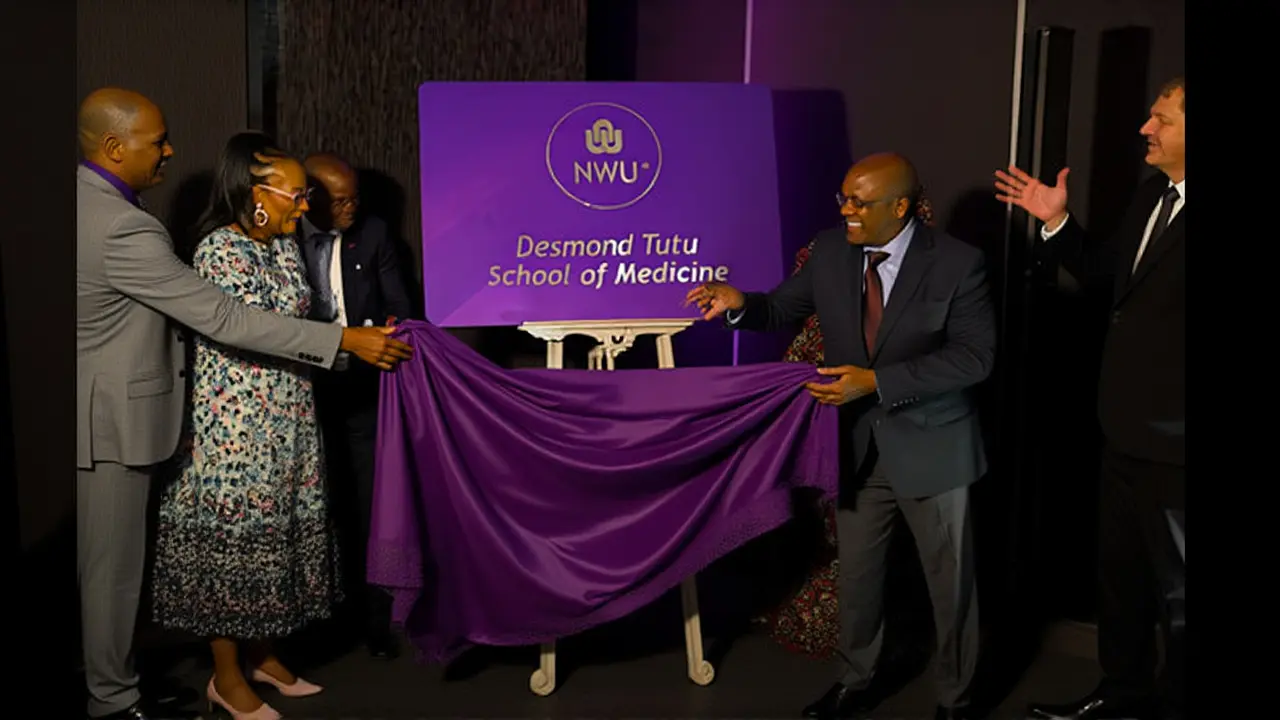
The North-West University (NWU) has officially launched the NWU Desmond Tutu School of Medicine, a move designed to tackle the critical shortage of doctors in rural South Africa. Based in Potchefstroom, the school aims to train a new generation of healthcare professionals who aren't just clinically skilled, but deeply committed to social justice and community service. By naming the institution after the late Archbishop, the university is signaling that medical excellence must go hand-in-hand with human rights.
Here's the thing: South Africa has been grappling with a skewed distribution of medical professionals for decades. Most specialists stick to the big cities, leaving rural clinics understaffed and overwhelmed. The NWU project isn't just about adding more degrees to the tally; it's about shifting where those doctors actually work. Turns out, the goal is to create a pipeline of practitioners who feel a kinship with the underserved populations they'll eventually treat.
- Institution: North-West University (NWU)
- Named After: Archbishop Desmond Tutu
- Primary Goal: Increasing medical capacity in rural South African regions
- Location: Potchefstroom campus and affiliated clinical sites
- Focus: Combining clinical expertise with social accountability
A Legacy of Justice in Medical Training
Why name a medical school after Desmond Tutu? For those who knew the Archbishop, the answer is obvious. He spent his life fighting the systemic inequalities of apartheid, often arguing that health and dignity are inseparable. By embedding his name into the fabric of the medical school, NWU is essentially telling its students that their white coats are tools for liberation and equity.
Interestingly, this isn't the first time the university has pushed for a more socially conscious curriculum. But this is a different beast entirely. Building a medical school from the ground up requires massive infrastructure, from anatomy labs to high-tech simulation centers. The university has had to secure rigorous accreditation from the Health Professions Council of South Africa (HPCSA) to ensure the degrees carry the necessary weight in the professional world.
The process hasn't been without its hurdles. Setting up clinical rotations in regional hospitals means the school has to coordinate with provincial health departments that are often stretched thin. But the urgency of the crisis—where some rural patients wait weeks for basic specialist consultations—makes these logistical headaches a secondary concern.
Bridging the Rural Healthcare Gap
The twist is that the school doesn't intend to operate as an ivory tower. The strategy is to recruit students from the very regions where doctors are most needed. Research has consistently shown that students from rural backgrounds are far more likely to return to those areas to practice after their internship. It's a simple logic: recruit locally, train globally, and serve locally.
Critics of such programs sometimes worry that emphasizing "social accountability" might dilute the rigorous scientific training required for medicine. However, the NWU leadership argues the opposite. They believe that understanding the socio-economic determinants of health—like poverty, lack of clean water, and distance to clinics—actually makes a doctor more effective, not less.
From a practical standpoint, this means the curriculum will likely include more community-based rotations and a heavier emphasis on primary healthcare. Instead of spending all their time in sterile tertiary hospitals, students will be out in the field, seeing how poverty manifests as physical illness in real-time.
The Broader Impact on South African Health
This development comes at a time when the South African government is pushing the National Health Insurance (NHI) bill, which aims to provide universal healthcare. For the NHI to work, you need boots on the ground. You can't have a universal system if you don't have the practitioners to deliver the care. The NWU Desmond Tutu School of Medicine is, in essence, a critical piece of the infrastructure needed to make universal healthcare a reality rather than a political slogan.
Moreover, the ripple effects extend beyond just the number of doctors. The presence of a medical school in the North West province attracts researchers, pharmacists, and nurses. It creates a "knowledge hub" that can drive innovation in tropical medicine and rural health management, potentially turning Potchefstroom into a center of excellence for community-centered care.
What Lies Ahead for the Institution
The road ahead involves scaling up the intake of students while maintaining a high standard of quality. There's also the challenge of the "brain drain," where South African-trained doctors migrate to the UK or Australia for better pay. To combat this, NWU may look into incentive programs or bonds that encourage graduates to stay within the provincial health system for a set period.
The details on the exact number of graduates per year are still being finalized, but the focus remains on quality over quantity. The university will likely establish partnerships with international medical schools to bring in guest lecturers and foster a global exchange of ideas, ensuring that rural medicine doesn't mean "second-rate" medicine.
Historical Context: Medicine and Social Change
To understand the weight of this announcement, one has to look back at the history of medical education in South Africa. During the apartheid era, medical training was strictly segregated and often used as a tool of control. The transition to a democratic system required a total overhaul of how doctors were trained, shifting from a colonial model to one based on the needs of the African majority.
By associating the school with Desmond Tutu, NWU is consciously aligning itself with the Truth and Reconciliation Commission's spirit. It is an admission that the medical field must heal not only the body but the societal scars left by systemic neglect. This aligns with a broader trend in global medicine where "Social Accountability" is becoming the gold standard for medical schools worldwide.
Frequently Asked Questions
Why is the school named after Desmond Tutu?
The school is named after the late Archbishop Desmond Tutu to symbolize the integration of medical excellence with social justice and human rights. His legacy of fighting inequality serves as a guiding philosophy for students to prioritize care for the marginalized and underserved populations of South Africa.
Where is the NWU Desmond Tutu School of Medicine located?
The school is based at the North-West University (NWU) in Potchefstroom. However, students will undergo clinical training across various regional hospitals and clinics throughout the North West province to ensure they gain experience in rural healthcare settings.
How does this school help with the doctor shortage?
The school specifically targets the rural doctor shortage by recruiting students from underserved areas and training them in a community-focused environment. This strategy increases the likelihood that graduates will return to their home regions to practice, rather than concentrating in urban centers.
What makes the curriculum different from traditional medical schools?
The curriculum emphasizes "social accountability," meaning students are taught to analyze the socio-economic factors that contribute to illness. There is a heavier focus on primary healthcare and community-based rotations compared to the traditional hospital-centric model of medical education.
Gary Clement
April 13, 2026 AT 10:08this is a solid approach to healthcare distribution. recruiting locally is the only way to ensure long term retention in rural areas because people generally want to be near their families and communities anyway
Antony Bachtiar
April 14, 2026 AT 23:55yea right. social accountabilty is just a fancy word for lowerin standards. probably gonna turn out to be a diploma mill for people who couldnt get into real med schools lol
Shelley Brinkley
April 15, 2026 AT 21:11totaly agree. its just performative activism naming it after tutu to hide the fact that the actual clinical training will probly be mid at best
Aaron X
April 16, 2026 AT 15:50The ontological framework here is fascinating. By intertwining the teleology of medical practice with a social justice mandate, they are effectively challenging the Cartesian dualism that often separates the biological pathology of a patient from their socio-economic environment. This systemic integration suggests a shift toward a more holistic epistemological approach to healing where the physician acts as an agent of societal remediation rather than a mere technician of the body
nikolai kingsley
April 17, 2026 AT 10:52honestly its about time they stop ignoreing the poor. its a moral failing to have doctors only in cities. hope they actually stick to it and dont just take the money for a fancy name
Beth Elwood
April 17, 2026 AT 15:32This is such a win for public health 🌟 The focus on primary care is exactly what is needed to lower mortality rates in these regions 🏥💉 Great to see a university taking this initiative! 👏
Angie Khupe
April 18, 2026 AT 02:07I love seeing people come together for a cause like this 😊 It really feels like a step toward healing the whole country
Josh Raine
April 18, 2026 AT 22:01Why is everyone acting like this solves the brain drain? 🙄 You can train a thousand doctors in Potchefstroom but if the pay is trash they're still gonna fly to London the second they get their license. It is absolutely infuriating that we pretend these local initiatives fix a global economic disparity. You can't fight the market with a nice name on a building! 😠
Mason Interactive
April 18, 2026 AT 23:38It is pretty cool to see this happen. Coming from a US perspective, we have similar programs like those in the Midwest or Appalachia that try to keep docs local, and it really is the only way to make it work
Mel Alm
April 19, 2026 AT 16:24really hope the students get enough support too. its a lot of presure to carry a legacy like tutus while studing med
Alex Green international
April 20, 2026 AT 05:59It is truly commendable to prioritize the underserved populations. One must acknowledge the courage of the faculty in implementing such a rigorous social mandate within a clinical framework
Dianna Knight
April 22, 2026 AT 02:47Totally agree with the focus on SDOH-social determinants of health! 🌈 By integrating community-based rotations, they're essentially creating a feedback loop of empathy and expertise. It's a textbook example of social accountability in a clinical setting! ✨
Robin Godden
April 22, 2026 AT 23:49This is a wonderful initiative. I am sure this will bring great success to the people. It is very inspiring to see such progress in healthcare education. May this school produce many great doctors who serve with love and dedication